AI Agent Memory Synchronization: Engineering Persistent Multi-Agent Context
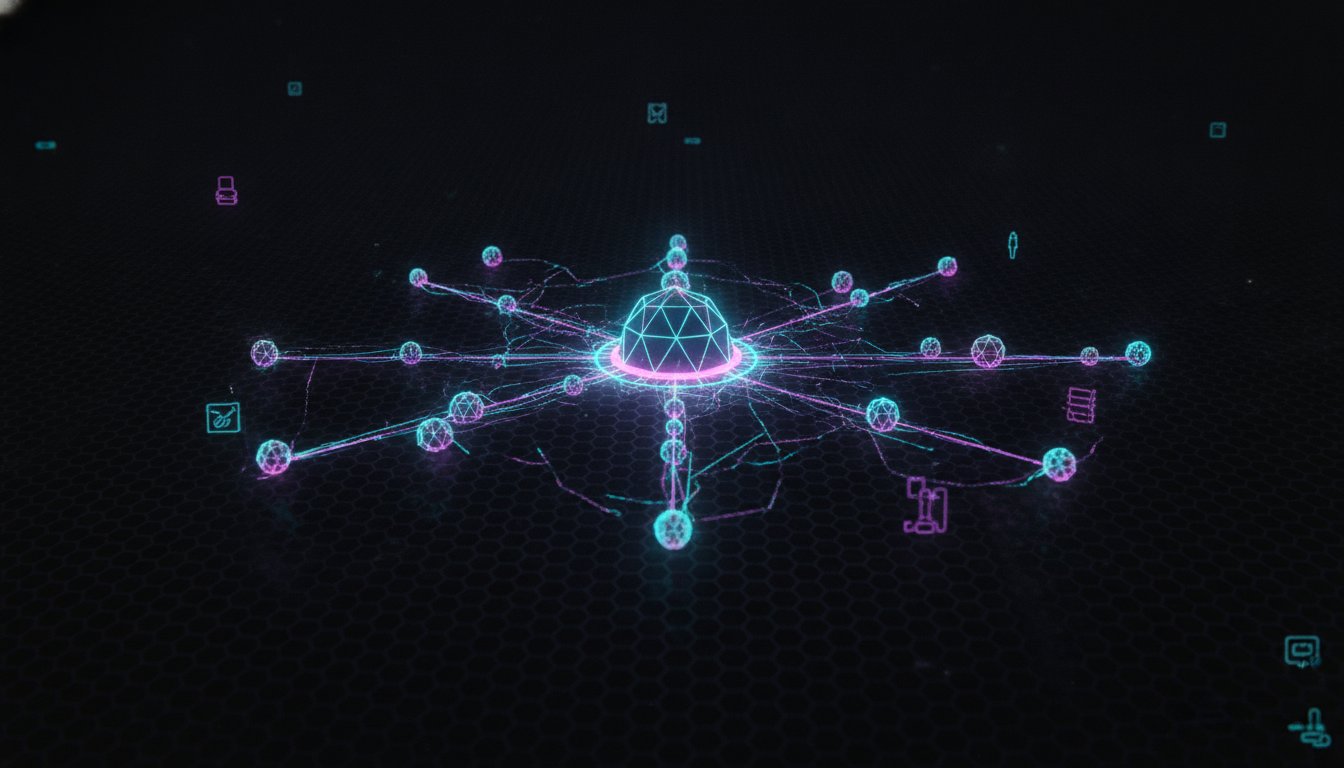
Your multi-agent system isn't failing because your models are weak. It's failing because your memory architecture is a leaky bucket. Context drift isn't an inevitability. It's a symptom of treating shared knowledge as a database problem rather than a synchronization protocol problem. You're likely burning through thousands in API costs by dumping redundant context into every prompt just to keep your agents aligned. This brute-force approach to AI agent memory synchronization is a technical debt trap that scales poorly and sacrifices data sovereignty to cloud-based vector providers.
You know that context-heavy dumping is unsustainable and architecturally lazy. You need a system where agents share an evolving, persistent state without the overhead of massive token windows. This guide provides the blueprint for building a scalable architecture for shared agent memory. You'll learn how to implement a graph-native retrieval system using the Portable Memory Format (PMF) to achieve a 98% reduction in token usage. We'll examine the engineering behind MCP-native memory servers that allow you to maintain absolute ownership of your data while ensuring high-velocity performance across your entire agentic stack.
Key Takeaways
- Distinguish between simple state persistence and active synchronization to ensure heterogeneous agents operate on a unified, real-time factual baseline.
- Eliminate the "context dump" anti-pattern to stop wasting API budgets on redundant data and reduce system latency across your agentic workflows.
- Deploy a scalable architecture for AI agent memory synchronization using role-specific Knowledge Buckets and MCP-native servers for seamless interoperability.
- Adopt the Portable Memory Format (PMF) to maintain absolute ownership of your data and prevent vendor lock-in with cloud-based vector providers.
- Transition from fragile distributed sync models to a centralized memory layer that acts as a high-velocity, single source of truth for your entire stack.
The Architecture of AI Agent Memory Synchronization
Most developers confuse state persistence with synchronization. Saving a log to a JSON file isn't memory; it's an archive. True AI agent memory synchronization is the real-time alignment of state across heterogeneous agent environments. In complex multi-agent systems, agents must operate on the same factual baseline. If Agent A learns a user's preference and Agent B remains oblivious, the system breaks. You aren't just saving data. You're orchestrating a living state.
State persistence is a passive act of storage. Synchronization is an active process of sharing and updating. A centralized memory layer acts as the nervous system for your agents, preventing "agent amnesia" by ensuring context doesn't die when a session ends. To achieve this, you need a graph-native backbone. While traditional databases store flat rows, a graph-native approach preserves the relational context between entities. It allows agents to understand not just what a piece of data is, but how it connects to every other observation in the system.
The Problem of Context Drift
When agents work in isolation, they hallucinate divergent realities. One agent might assume a project is in the testing phase while another thinks it's still in development. Reconciling these conflicting observations manually is a technical nightmare. It drains compute resources and demands excessive human oversight. Context drift is the delta between an agent’s local state and the global knowledge base. If you don't solve this at the architectural level, your agents will eventually provide contradictory outputs that erode system reliability.
Beyond Vector Search: The Need for Graph-Native Sync
Vector search is a blunt instrument. It finds similarity but ignores structure. If your agents need to understand how a specific software bug relates to a legacy codebase and a recent pull request, simple embeddings will fail. They lack the structural integrity to maintain complex relationships over time. You need a graph-native sync protocol to keep the fabric intact. Unlike standard RAG, graph-native storage allows for atomic updates across the entire memory fabric. This ensures that when one node changes, the entire network stays coherent. For a deeper dive into why this matters, read our comparison of graph RAG vs vector RAG to see how relational context transforms agent performance.
Synchronization Patterns: Centralized vs. Distributed Memory
Architecting for AI agent memory synchronization requires a decisive choice between centralized and distributed models. You either establish a single source of truth or manage a fragmented network of state. A centralized memory layer provides a unified repository for all agent instances. It eliminates the logical conflicts inherent in complex multi-agent stacks. While managed cloud providers argue that centralized ingestion is only viable on their proprietary pipelines, self-hosting your memory layer offers superior data sovereignty and lower latency for internal reasoning loops.
Distributed synchronization, or peer-to-peer memory sharing, introduces significant consistency hurdles. In this model, agents must negotiate state changes across the network. This often results in high-overhead gossip protocols that drain compute resources. Hybrid models attempt to bridge this gap by utilizing local short-term buffers for immediate tasks while maintaining periodic global synchronization for long-term persistence. This approach balances the speed of local execution with the necessity of a shared knowledge base.
Reasoning speed is directly tied to synchronization latency. Every network hop between an agent and its memory adds a performance tax. If your architecture requires multiple round trips to resolve a single query, your agents will feel sluggish and disconnected. High-velocity systems prioritize lean, high-throughput connections to the memory fabric to keep reasoning cycles tight and responsive.
The MCP-Native Advantage
Standardization is the only way to avoid integration hell. The Model Context Protocol (MCP) has emerged as the industry standard for memory access, decoupling storage from agent logic. By deploying an MCP native memory server, you create a plug-and-play environment where any compliant agent can interact with the shared state. This eliminates the need for brittle, custom glue code and ensures your architecture remains flexible as new models emerge.
Consistency Models in Agent Memory
Engineering for persistence requires a trade-off between eventual and strong consistency. Strong consistency ensures all agents see the same data simultaneously but can create massive system bottlenecks. Eventual consistency allows for faster writes at the risk of temporary divergence. When two agents attempt to update the same node, write-conflicts are inevitable. Utilizing Knowledge Buckets allows you to partition memory by domain or agent role. This isolation ensures that a conflict in one segment doesn't halt the entire system. Adhering to NIST AI standards and frameworks provides a reliable baseline for building these trustworthy, resilient architectures. If you're building for high-scale performance, you can examine the NovaCortex core architecture to see these consistency patterns implemented in a graph-native environment.
The Token Tax: Why Dumping Context Fails at Scale
Infinite context windows are a performance trap disguised as a feature. Don't fall for the marketing. Brute-forcing context by feeding entire knowledge bases into an LLM is engineering malpractice. It forces the model to sift through massive amounts of noise to find a single signal. This process introduces latency and degrades reasoning quality. More importantly, it creates a "token tax" that scales exponentially. Every time your agents interact, you're paying to re-process information the system should already know. This isn't just inefficient. It's unsustainable for any production-grade deployment.
Redundant AI agent memory synchronization drains API budgets faster than almost any other architectural flaw. If you're resending the same 100,000 tokens of "context" for every agent turn, you're burning capital on data you've already processed. Precision is the only solution. By utilizing Knowledge Buckets, you can achieve a 98% reduction in token usage. NovaCortex uses graph-native indexing to isolate only relevant context nodes, ensuring your agents receive exactly what they need and nothing they don't. This surgical approach to memory ensures that your synchronization remains lean and your costs remain flat even as your knowledge base grows.
Context Window Optimization
Stop syncing raw text strings. It's wasteful. Selective synchronization focuses on entities and relations, which are high-density data structures. High memory density allows you to pack more meaning into fewer tokens. By prioritizing the structural connections between data points, you ensure the agent understands the "why" without needing the "everything." For a technical breakdown of how this compares to traditional storage, see our analysis of vector database vs graph memory and its impact on storage efficiency.
Performance Benchmarking
Vector-only RAG is too slow for complex multi-agent reasoning. It relies on similarity scores that often return irrelevant chunks. Graph-native synchronization outperforms vector-only models by traversing established relationships rather than calculating new ones. This reduces "hallucination-by-noise" because the context provided to the agent is structurally coherent. Local hosting further accelerates this process. By hosting your memory server on private infrastructure, you eliminate the round-trip latency of cloud-based vector providers. You get higher throughput and faster reasoning cycles. You get a system that scales with your needs, not your vendor's pricing tiers.
Implementing Multi-Agent Sync with Knowledge Buckets
Engineering a robust system for AI agent memory synchronization requires more than just a shared database. It requires a structured implementation framework. You don't just dump data. You architect access. Follow these five steps to deploy a production-grade synchronization layer using Knowledge Buckets.
- Step 1: Define Knowledge Buckets. Partition your memory by agent roles and specific domains. A coding assistant shouldn't be swimming in marketing analytics data. Isolation is the first line of defense against context noise.
- Step 2: Initialize the MCP-Native Server. Deploy your memory layer on private infrastructure. Using an MCP-native server ensures that your memory remains model-agnostic and fully interoperable across your entire agent fleet without proprietary lock-in.
- Step 3: Configure Sync Triggers. Choose between event-based triggers for real-time alignment or polling for less critical updates. Event-based synchronization is the standard for high-velocity environments where agents must react to state changes instantly.
- Step 4: Resolve Knowledge Conflicts. Establish clear policies for shared nodes. When two agents update the same entity, use timestamp-based resolution or semantic merging to maintain a single, coherent truth across the fabric.
- Step 5: Monitor Precision. Use the management interface to audit retrieval accuracy and token consumption. If token usage spikes, refine your bucket boundaries to ensure only the most relevant nodes are being synchronized during reasoning cycles.
Modular Memory Partitioning
Granular partitioning is essential for scaling. Without it, your agents will eventually drown in irrelevant context. Modular memory allows you to scale your agent fleet without a linear increase in synchronization complexity. By separating transient task data from long-term factual nodes, you maintain high-velocity performance. For a deeper look at partitioning strategies, see our guide on AI agent state management. Dynamic bucket scaling ensures that as your fleet grows, your memory architecture adapts rather than breaking under the weight of its own data.
Handling Real-Time Knowledge Updates
Low latency is non-negotiable. Your ingestion pipeline must transform raw observations into synchronized graph nodes in milliseconds. This is achievable even on lightweight hardware like a Raspberry Pi or a standard VPS if you avoid the bloat of cloud-native vector services. Security is equally critical. When syncing memory across untrusted or edge environments, implement strict encryption protocols for the Portable Memory Format (PMF). You own the format. You own the security. This is the foundation of digital sovereignty in AI architecture.
NovaCortex: The Privacy-First Standard for Synchronized Memory
Managed cloud services are a velvet cage. They offer convenience while stripping you of control. True AI agent memory synchronization requires a foundation of digital sovereignty. If your agents' shared state lives on a vendor's server, your intellectual property isn't yours; it's a tenant on someone else's infrastructure. NovaCortex Self-Hosted Edition returns that control to the engineer. By running your memory layer locally, you eliminate the privacy risks and latency spikes inherent in third-party ingestion pipelines. You keep your synchronized knowledge behind your own firewall. This ensures that sensitive data never leaves your controlled environment. This architectural choice is central to our broader vision for AI agent long term memory, where persistence is a right, not a subscription service.
Privacy-by-design isn't a marketing slogan here. It's an engineering requirement. When you host your own MCP-Native Memory Server, you dictate the security protocols. You don't rely on a black-box provider to handle your data safely. You own the hardware. You own the stack. This rejection of bloated, restrictive cloud systems allows for higher-velocity performance and absolute data ownership.
Portable Memory vs. Proprietary Silos
The Portable Memory Format (PMF) ends the era of proprietary vendor lock-in. Most memory providers trap your data in their specific vector schemas. PMF is different. It's a vendor-neutral standard designed for interoperability. You can migrate your synchronized memory layers across different LLM providers without losing a single relational node. Because NovaCortex is built on an Apache-2.0 open-source foundation, your infrastructure is future-proof. You aren't just building for today's models. You're building a permanent knowledge asset that remains readable and transferable regardless of which model provider dominates the market next year.
Enterprise-Grade Management
Scaling doesn't have to mean complexity. You can start small on a single Raspberry Pi and scale to a cluster of enterprise-grade servers as your agent fleet grows. NovaCortex provides the multi-user controls and advanced security protocols required for high-stakes organizational sync. It handles the heavy lifting of state alignment so you can focus on agent logic. The management interface allows you to audit retrieval precision and refine your Knowledge Buckets in real-time. Stop compromising on performance or privacy. Deploy NovaCortex for your multi-agent architecture and build a system that you actually own.
Architecting Sovereign Agent Intelligence
Brute-force context dumping is a legacy approach that drains budgets and degrades performance. You now have the architectural blueprint to replace bloated RAG systems with a precision-engineered synchronization layer. By implementing Knowledge Buckets and an MCP-native server, you ensure your agents operate on a unified, real-time factual baseline without the overhead of redundant tokens. Mastering AI agent memory synchronization is the final hurdle in moving from fragile chat bots to resilient agentic systems.
You've seen how graph-native retrieval and the Portable Memory Format (PMF) provide the structural integrity that vector search lacks. This isn't just about efficiency; it's about digital sovereignty. By self-hosting your memory layer, you eliminate vendor lock-in and keep your intellectual property behind your own firewall. You get a 98% reduction in token usage and the high-velocity performance of a graph-native backbone.
Build something that lasts. The era of disposable AI context is over. It's time to engineer persistence into your multi-agent stack.
Frequently Asked Questions
What is the Model Context Protocol (MCP) in the context of memory synchronization?
The Model Context Protocol (MCP) is an open standard that decouples the memory layer from the specific LLM being used. It acts as a universal interface, allowing agents from different providers to access a shared state without custom glue code. By using an MCP-native memory server, you ensure that your synchronization layer remains model-agnostic and fully interoperable across your entire agentic stack.
How does graph-native memory reduce token usage compared to standard RAG?
Graph-native memory achieves up to a 98% reduction in token usage by retrieving high-density relational nodes instead of bulk text chunks. Traditional RAG often dumps irrelevant surrounding text into the context window, which wastes API budget and increases noise. Graph retrieval targets only the specific entities and relationships needed for the current reasoning cycle, keeping the context lean and precise.
Can I sync AI agent memory across different LLM providers like OpenAI and Anthropic?
Yes. Because NovaCortex utilizes the Portable Memory Format (PMF) and MCP-native architecture, it facilitates seamless AI agent memory synchronization across heterogeneous providers. You can have an OpenAI agent update a knowledge node that an Anthropic agent retrieves seconds later. This setup eliminates model-specific silos and ensures your entire fleet operates on a unified, real-time factual baseline.
Is it possible to host NovaCortex on a Raspberry Pi for local agent sync?
Absolutely. The self-hosted edition is engineered for high-velocity performance on lean hardware, including Raspberry Pi and standard VPS deployments. This local-first approach eliminates the round-trip latency of cloud-based vector databases. It provides a private environment for agent synchronization that functions entirely behind your own firewall for maximum data sovereignty.
How does NovaCortex handle conflicts when two agents update the same memory node simultaneously?
NovaCortex employs semantic merging and timestamp-based resolution policies to handle concurrent updates. When two agents attempt to modify the same knowledge node, the system evaluates the delta and integrates the changes into a single, coherent truth. This prevents the state fragmentation that typically occurs in distributed multi-agent systems without a centralized synchronization protocol.
Why is a portable memory format important for long-term AI agent development?
A portable memory format (PMF) protects you from vendor lock-in and ensures your data remains readable as models evolve. Most cloud providers trap your knowledge base in proprietary vector schemas that are difficult to migrate. PMF is an interoperable standard that allows you to move your synchronized memory fabric between different providers and infrastructures without losing the structural integrity of your data.
What are Knowledge Buckets and how do they help in memory organization?
Knowledge Buckets are modular partitions that isolate data based on agent roles or specific domains. They prevent cross-contamination by ensuring that a marketing agent doesn't receive irrelevant context from a DevOps agent's memory. This granular organization improves retrieval precision and ensures that AI agent memory synchronization only occurs within relevant task boundaries.
Can NovaCortex be used for offline-first AI agent synchronization?
Yes. Since NovaCortex is a self-hosted solution that doesn't rely on cloud-native ingestion pipelines, it is ideal for offline-first architectures. Agents can synchronize their state across a local network without an active internet connection. This is a critical requirement for edge computing and high-security environments where data cannot be transmitted to external cloud providers.
FAQ
What is the Model Context Protocol (MCP) in the context of memory synchronization?
The Model Context Protocol (MCP) is an open standard that decouples the memory layer from the specific LLM being used. It acts as a universal interface, allowing agents from different providers to access a shared state without custom glue code. By using an MCP-native memory server, you ensure that your synchronization layer remains model-agnostic and fully interoperable across your entire agentic stack.
How does graph-native memory reduce token usage compared to standard RAG?
Graph-native memory achieves up to a 98% reduction in token usage by retrieving high-density relational nodes instead of bulk text chunks. Traditional RAG often dumps irrelevant surrounding text into the context window, which wastes API budget and increases noise. Graph retrieval targets only the specific entities and relationships needed for the current reasoning cycle, keeping the context lean and precise.
Can I sync AI agent memory across different LLM providers like OpenAI and Anthropic?
Yes. Because NovaCortex utilizes the Portable Memory Format (PMF) and MCP-native architecture, it facilitates seamless AI agent memory synchronization across heterogeneous providers. You can have an OpenAI agent update a knowledge node that an Anthropic agent retrieves seconds later. This setup eliminates model-specific silos and ensures your entire fleet operates on a unified, real-time factual baseline.
Is it possible to host NovaCortex on a Raspberry Pi for local agent sync?
Absolutely. The self-hosted edition is engineered for high-velocity performance on lean hardware, including Raspberry Pi and standard VPS deployments. This local-first approach eliminates the round-trip latency of cloud-based vector databases. It provides a private environment for agent synchronization that functions entirely behind your own firewall for maximum data sovereignty.
How does NovaCortex handle conflicts when two agents update the same memory node simultaneously?
NovaCortex employs semantic merging and timestamp-based resolution policies to handle concurrent updates. When two agents attempt to modify the same knowledge node, the system evaluates the delta and integrates the changes into a single, coherent truth. This prevents the state fragmentation that typically occurs in distributed multi-agent systems without a centralized synchronization protocol.
Why is a portable memory format important for long-term AI agent development?
A portable memory format (PMF) protects you from vendor lock-in and ensures your data remains readable as models evolve. Most cloud providers trap your knowledge base in proprietary vector schemas that are difficult to migrate. PMF is an interoperable standard that allows you to move your synchronized memory fabric between different providers and infrastructures without losing the structural integrity of your data.
What are Knowledge Buckets and how do they help in memory organization?
Knowledge Buckets are modular partitions that isolate data based on agent roles or specific domains. They prevent cross-contamination by ensuring that a marketing agent doesn't receive irrelevant context from a DevOps agent's memory. This granular organization improves retrieval precision and ensures that AI agent memory synchronization only occurs within relevant task boundaries.
Can NovaCortex be used for offline-first AI agent synchronization?
Yes. Since NovaCortex is a self-hosted solution that doesn't rely on cloud-native ingestion pipelines, it is ideal for offline-first architectures. Agents can synchronize their state across a local network without an active internet connection. This is a critical requirement for edge computing and high-security environments where data cannot be transmitted to external cloud providers.