Vector Database vs Graph Memory: Engineering Persistent AI Context in 2026
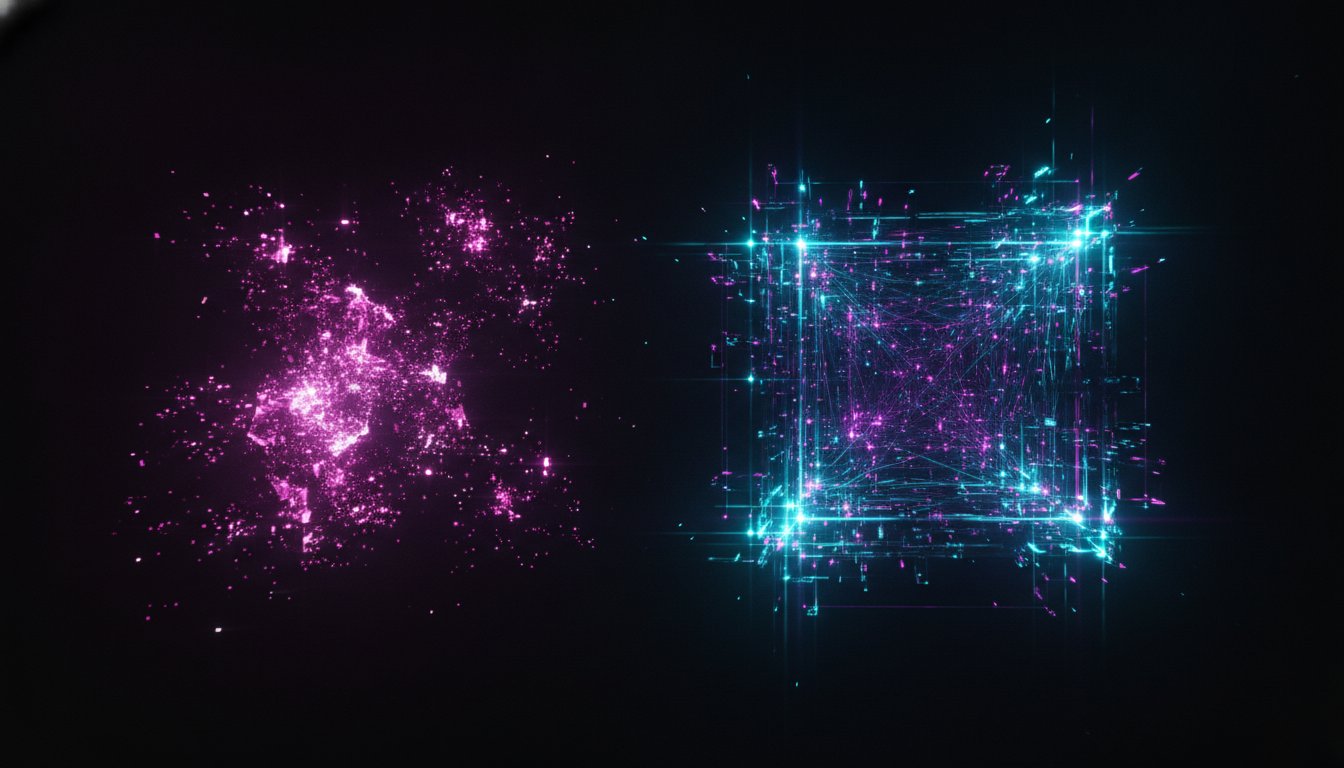
Your vector database is a graveyard of disconnected facts. It's excellent for finding similar text; it's useless for maintaining relational logic. In the engineering race to build persistent AI, many developers have hit a wall where similarity search fails. You're likely watching your LLM API costs skyrocket as you bloat context windows with fragmented data. This is a wasteful, inefficient cycle. It leads to hallucinations. It creates brittle, unreliable performance.
The debate over vector database vs graph memory isn't just about storage. It's about cognition. You need a system that understands how entities relate, not just how they're semantically close. This article explores why traditional vector stores are failing modern AI agents and how graph-native memory layers provide the deterministic retrieval required for true long-term reasoning. We'll show you how to regain data sovereignty through self-hosting while reducing token usage by up to 98% using the NovaCortex Self-Hosted Edition and the Portable Memory Format (PMF) to ensure your architecture remains lean, fast, and independent.
Key Takeaways
- Stop relying on semantic proximity to solve relational problems; vector databases hit a "Context Wall" when AI agents require deep, multi-hop logic.
- Master the architectural shift of vector database vs graph memory to transform fragmented data chunks into a persistent, interconnected knowledge web.
- Eliminate the "Token Tax" by utilizing precision retrieval methods that cut LLM API costs and token usage by up to 98%.
- Establish digital sovereignty with the NovaCortex Self-Hosted Edition, ensuring your agent’s cognition remains private and under your direct control.
- Future-proof your infrastructure with the Portable Memory Format (PMF), preventing vendor lock-in and allowing seamless knowledge transfer between agentic systems.
Beyond Semantic Similarity: Why Vector Databases Hit the Context Wall
A Vector database functions as a high-dimensional indexing engine. It's built for Approximate Nearest Neighbor (ANN) search, designed to find data points that share a semantic neighborhood. In simple RAG applications, this works. You ask a question, and the system retrieves text chunks with similar embeddings. But similarity is a surface metric. It doesn't imply a logical connection. When engineering persistent context, the vector database vs graph memory debate reveals a fundamental flaw in vector-only architectures: they lack relational awareness.
The "Context Wall" occurs when an agent requires specific, structural facts that aren't semantically similar to the prompt. Vector stores rely on cosine similarity, a mathematical calculation of the angle between two vectors. This is excellent for finding synonyms or related topics. It's useless for abstract logic. If your agent needs to know how a specific "Component A" affects "System Z" through a chain of five intermediate dependencies, a vector search will likely fail. It retrieves the fragments. It misses the bridge. This leads to "Fragmented Retrieval," where the LLM receives a bag of related facts but no roadmap of how they connect.
The Problem with Top-K Retrieval
Standard retrieval pipelines use a top-k approach. They grab the five or ten most "similar" chunks and shove them into the prompt. This is a gamble. Often, the most critical piece of information is the 11th or 12th result, just outside the retrieval window. Even with expanded context windows, you face the "lost in the middle" phenomenon. Research shows LLMs frequently ignore data buried in the center of long prompts. You end up paying for thousands of tokens that the model effectively discards. For autonomous task execution, fuzzy matching isn't enough. You need the precision of a direct link, not the suggestion of a nearby neighbor.
The LLM Hallucination Trap
Fragmented data is the primary driver of agent drift. When a vector store provides disconnected chunks, the LLM is forced to bridge the gaps using probabilistic guesses. This is where hallucinations start. The model isn't "lying"; it's simply trying to fulfill its objective with incomplete relational data. Semantic similarity is a weak foundation for multi-step workflow automation. If the retrieval engine can't explicitly define the relationship between a user, their permissions, and a specific database schema, the agent will eventually guess wrong. This noise scales with complexity. As your data grows, the probability of the "wrong" similar chunk being retrieved increases, leading to a total breakdown in agent reliability.
Graph-Native Memory: Preserving Relational Logic for AI Agents
Graph memory isn't a storage bin for text snippets. It's an entity-relationship store. It treats knowledge as a connected web. Unlike vector databases that rely on nearness in a vacuum, graph structures preserve the logic between data points. In the 2026 engineering landscape, the choice between vector database vs graph memory determines whether your agent is merely a search engine or a cognitive system. If your data lacks structure, your agent lacks intelligence.
Multi-hop reasoning is the primary advantage of this architecture. It allows an agent to traverse nodes to find non-obvious connections. If Node A is related to Node B, and Node B is related to Node C, the graph-native layer understands that A and C are linked through B. A vector search often misses this. It sees A and C as semantically distant. This capability enables agents to maintain state across long, complex conversations. They don't just recall what was said; they understand the evolving relationships between entities mentioned throughout the session. This is how you build an agent that actually learns your business logic.
Entity-Relationship Mapping in 2026
Graph memory identifies subjects, predicates, and objects to build a robust world model. It uses nodes to represent entities and edges to define their interactions. This structure is vital for maintaining agent consistency. This mapping prevents the agent from drifting into hallucinations when context grows sparse. It anchors the model to a verifiable knowledge graph. For a deeper look at the underlying architecture, explore the principles of AI agent long term memory.
Deterministic vs. Probabilistic Retrieval
When comparing vector database vs graph memory, the core distinction lies in how they handle high-entropy environments. Probabilistic retrieval is a guess. It's a high-quality guess, but it's still based on probability. In contrast, graph traversal is deterministic. It's binary. A connection either exists, or it doesn't. Graph Databases as Long-Term Memory provide a structured substrate that eliminates the "needle in a haystack" problem. By following logical paths, you reduce the search space significantly. You aren't scanning millions of vectors for something similar. You're following a specific edge to the exact node required.
This precision is the foundation for reliable automation. It allows you to move away from wasteful, brute-force context stuffing. If you're tired of probabilistic drift and want to start building with deterministic logic, you can explore our open-source core on GitHub.
The Economics of Memory: Token Efficiency and Performance
Inference costs are the silent killer of AI scaling. When evaluating vector database vs graph memory, engineers often focus on storage pricing while ignoring the "Token Tax." Standard RAG pipelines are notoriously wasteful. They retrieve bulky text chunks based on fuzzy similarity, forcing you to pay for thousands of redundant tokens that add zero cognitive value. It's an architectural inefficiency that bleeds capital. You're effectively paying for noise.
Precision is the only way to scale. By moving to a graph-native architecture, you shift from probabilistic guessing to deterministic retrieval. As noted in Agent Memory: Beyond Vector Databases, similarity is not relevance. NovaCortex achieves a confirmed 98% reduction in token usage by extracting only the specific nodes and edges required for a task. Instead of flooding a context window with 10,000 tokens of vector noise, you send 200 tokens of high-density relational data. The performance gains are immediate. The cost savings are permanent.
Latency profiles also differ significantly. High-dimensional vector search requires complex mathematical operations across massive datasets. Graph-native lookups rely on indexed traversals, which are inherently faster for relational queries. This efficiency extends to hardware. You don't need a cluster of high-end GPUs to maintain persistent memory. NovaCortex is lean enough to run on edge devices like a Raspberry Pi, providing local, high-velocity context without the cloud overhead or proprietary lock-in.
Cutting the RAG Tax
The math is clear. If you can achieve the same reasoning quality with 2% of the context length, your margins explode. We utilize Knowledge Buckets to segment agent memory, ensuring that only the most relevant sub-graphs are active at any given time. Token Efficiency is the ratio of retrieved utility to total context length. High efficiency isn't a luxury; it's a requirement for sustainable AI operations in 2026. Stop paying for the "lost in the middle" noise that plagues traditional vector stores.
Low-Latency Context Injection
Latency kills user experience. Our MCP-native architecture allows for low-latency communication between the model and the memory layer, bypassing the bottlenecks of traditional database drivers. Graph-native indexing speeds up retrieval for real-time agents by following explicit logical paths rather than scanning embedding spaces. For real-time benchmarks and a comparison of different caching strategies, see our analysis on Redis vs graph memory for AI agents. By choosing a relational substrate, you ensure that context injection remains a high-velocity operation, even as your knowledge base grows to millions of nodes.
Architecture Decision Matrix: Choosing Your Agent Knowledge Base
Architecture is destiny. Choosing between a vector database vs graph memory isn't a matter of preference; it's a calculation of your system's required cognitive load. If your agent only needs to retrieve similar documents for human review, a vector store suffices. But if your agent must execute multi-step workflows or maintain a consistent world model, a flat vector index will fail. You need a decision matrix that prioritizes relational integrity over fuzzy proximity.
Many teams fall for the "Hybrid Myth." They attempt to layer a vector store on top of a legacy graph database, hoping for the best of both worlds. This is often inefficient. It introduces massive synchronization overhead and doubles your infrastructure footprint. True performance comes from a graph-native foundation where the memory layer understands relationships at the hardware level. When evaluating graph RAG vs vector RAG, enterprise architects must decide if they want a search engine or a reasoning engine. One finds fragments; the other preserves logic.
Sovereignty is the final variable. Managed cloud vector stores offer convenience at the cost of vendor lock-in and high API latency. Self-hosting your memory layer ensures that your agent’s long-term cognition remains private and portable. By using the NovaCortex Self-Hosted Edition, you maintain absolute control over your data structures while benefiting from the speed of a specialized, MCP-native architecture.
When to Stick with Vector Databases
Vector databases remain the standard for high-entropy, unstructured discovery. If your primary use case involves pure image search, simple FAQ bots, or initial fuzzy discovery where "close enough" is the objective, stick with vectors. These systems excel when the data lacks an inherent schema and the query is exploratory. However, they're a poor fit for autonomous agents with complex state requirements. If your agent needs to understand the nuance of a specific user’s historical preferences across different sessions, a similarity score won't provide the necessary precision.
When Graph Memory is Non-Negotiable
Relational precision is mandatory for high-stakes environments. Use cases like legal analysis, automated code generation, and multi-agent coordination require a graph-native foundation to prevent logic breakdown. This is particularly true for AI agent state management, where the system must track evolving variables and dependencies in real time. Complex reasoning isn't a probabilistic outcome; it's a traversal of facts. In privacy-first organizations, graph memory provides the deterministic boundaries needed to ensure the agent never drifts outside of its authorized knowledge base.
NovaCortex: Sovereign Graph-Native Memory for AI Agents
Managed vector stores are a trap. They offer initial ease of use but demand your data sovereignty as payment. NovaCortex Self-Hosted Edition is the architectural correction to this trend. It is a graph-native memory layer built for engineers who reject bloated, restrictive systems. While the industry debates vector database vs graph memory, we provide the tools to build a private, relational substrate that actually scales. You don't need a proprietary cloud to maintain persistent AI context. You need a specialized engine that respects your data ownership.
Scalability shouldn't compromise speed. We utilize Knowledge Buckets to organize agent memory into modular, manageable segments. This allows your system to load specific sub-graphs without scanning the entire knowledge base. It is lean. It is fast. It is engineered for high-velocity performance on your own infrastructure. By segmenting memory, you ensure that as your data grows, your retrieval times remain flat. This is the foundation of a high-performance cognitive layer.
Ending Vendor Lock-in with PMF
Your AI’s memory shouldn't be a prisoner of a specific cloud provider. It should be as portable as a CSV or JSON file. We developed the portable memory format for AI (PMF) to break the cycle of vendor lock-in. PMF allows you to move your entire relational knowledge base between local servers and private VPS instances with zero friction. It treats knowledge as a sovereign asset. You own the nodes. You own the edges. You own the logic. This portability ensures that your agent's cognition isn't tied to a single vendor's pricing whims or service availability.
Deploying the MCP-Native Memory Server
Standardization is the key to interoperability. Our architecture features an MCP native memory server that utilizes the Model Context Protocol to standardize agent-to-memory communication. This isn't just about convenience. It's about performance. MCP-native integration allows for seamless, low-latency context injection across different agentic frameworks. Integrating NovaCortex into your existing stack is a straightforward engineering task. You define your Knowledge Buckets, point your agent to the MCP server, and begin traversing your relational data. The result is a deterministic system that outperforms the "guess-and-check" nature of vector database vs graph memory comparisons found in legacy RAG setups. Stop building on shaky foundations. Build for sovereignty.
Build for Cognition, Not Just Retrieval
The era of throwing fragmented chunks into a context window and hoping for the best is over. Engineering persistent AI context in 2026 requires more than just proximity; it requires structure. While the industry debate between a vector database vs graph memory continues, the technical reality is clear. You need the deterministic logic of a graph-native substrate to eliminate hallucinations and achieve true multi-hop reasoning.
Transitioning to a relational memory layer isn't just an architectural upgrade; it's a financial necessity. By achieving 98% token savings and removing the "Token Tax," you transform your AI agents from expensive experiments into efficient systems. With the Apache-2.0 open source core, you gain self-hosted privacy without sacrificing velocity. The tools for digital independence are ready for implementation.
Take control of your infrastructure today. Build a memory layer that grows with your intelligence rather than against your budget.
Engineering Persistent Context: Frequently Asked Questions
What is the main difference between a vector database and graph memory for AI?
Vector databases excel at semantic similarity, finding data that is "like" a query based on mathematical proximity. Graph memory focuses on relational logic, storing knowledge as a connected web of entities and their specific interactions. In the vector database vs graph memory comparison, vectors are probabilistic while graphs are deterministic. One guesses; the other knows. This distinction is the difference between a fuzzy search and a precise reasoning engine.
Can I use a vector database and graph memory together?
You can, but efficiency must remain the priority. Use vector stores for initial exploratory discovery and graph memory as the persistent relational substrate for core logic. This prevents the "Hybrid Myth" where redundant storage layers increase latency and costs. NovaCortex provides the relational layer that standard vector-only RAG pipelines lack, ensuring that your vector database vs graph memory architecture remains lean and high-velocity.
Why does graph memory reduce token usage by 98%?
It replaces bulk with precision. Traditional RAG dumps entire text chunks into the context window to capture potentially relevant data, creating massive "Token Tax" waste. Graph memory retrieves only the specific nodes and edges required for a specific task. Sending 200 tokens of high-density relational logic instead of 10,000 tokens of fuzzy vector noise results in immediate and permanent cost savings for your inference budget.
Is NovaCortex compatible with existing RAG pipelines?
It is. NovaCortex functions as an architectural correction for bloated RAG systems. By utilizing our MCP-Native Memory Server, you can integrate relational context into your current stack via standardized protocols. It bridges the gap between agentic frameworks and persistent storage, allowing you to swap fragmented vector retrieval for structured graph logic without rebuilding your entire automation pipeline from scratch.
Do I need a special server to host NovaCortex Self-Hosted Edition?
No specialized hardware is required. NovaCortex is engineered for lean, high-velocity performance on standard infrastructure. You can deploy it on a private VPS or even edge devices like a Raspberry Pi. It prioritizes digital sovereignty, giving you absolute control over your memory layer without the need for expensive, proprietary cloud GPU clusters or restrictive vendor managed services.
What is the Portable Memory Format (PMF) used by NovaCortex?
Portable Memory Format (PMF) is our vendor-neutral schema for knowledge storage. It ensures that your agent’s long-term memory remains independent of any single platform or provider. PMF makes memory as portable as a JSON file, allowing you to move your relational knowledge base between different servers or environments without risking data loss or vendor lock-in. Your cognition remains your asset.
How does graph memory help stop AI agents from forgetting context?
It preserves state through entity-relationship mapping. While vector databases are essentially stateless search engines, graph memory builds a persistent world model that evolves with every interaction. By traversing nodes, agents maintain a consistent understanding of dependencies and historical context across sessions. This structural foundation prevents the drift and hallucinations caused by the fragmented retrieval found in traditional vector-based systems.
Is graph memory slower than vector search for large datasets?
For relational queries, it is significantly faster. Vector search involves complex mathematical operations across high-dimensional embedding spaces, which scales poorly without massive compute. Graph memory uses indexed traversals to follow explicit logical paths. This architecture provides low-latency context injection, ensuring that your agents remain responsive and accurate even as your Knowledge Buckets grow to contain millions of interconnected nodes.
FAQ
What is the main difference between a vector database and graph memory for AI?
Vector databases excel at semantic similarity, finding data that is "like" a query based on mathematical proximity. Graph memory focuses on relational logic, storing knowledge as a connected web of entities and their specific interactions. In the vector database vs graph memory comparison, vectors are probabilistic while graphs are deterministic. One guesses; the other knows. This distinction is the difference between a fuzzy search and a precise reasoning engine.
Can I use a vector database and graph memory together?
You can, but efficiency must remain the priority. Use vector stores for initial exploratory discovery and graph memory as the persistent relational substrate for core logic. This prevents the "Hybrid Myth" where redundant storage layers increase latency and costs. NovaCortex provides the relational layer that standard vector-only RAG pipelines lack, ensuring that your vector database vs graph memory architecture remains lean and high-velocity.
Why does graph memory reduce token usage by 98%?
It replaces bulk with precision. Traditional RAG dumps entire text chunks into the context window to capture potentially relevant data, creating massive "Token Tax" waste. Graph memory retrieves only the specific nodes and edges required for a specific task. Sending 200 tokens of high-density relational logic instead of 10,000 tokens of fuzzy vector noise results in immediate and permanent cost savings for your inference budget.
Is NovaCortex compatible with existing RAG pipelines?
It is. NovaCortex functions as an architectural correction for bloated RAG systems. By utilizing our MCP-Native Memory Server, you can integrate relational context into your current stack via standardized protocols. It bridges the gap between agentic frameworks and persistent storage, allowing you to swap fragmented vector retrieval for structured graph logic without rebuilding your entire automation pipeline from scratch.
Do I need a special server to host NovaCortex Self-Hosted Edition?
No specialized hardware is required. NovaCortex is engineered for lean, high-velocity performance on standard infrastructure. You can deploy it on a private VPS or even edge devices like a Raspberry Pi. It prioritizes digital sovereignty, giving you absolute control over your memory layer without the need for expensive, proprietary cloud GPU clusters or restrictive vendor managed services.
What is the Portable Memory Format (PMF) used by NovaCortex?
Portable Memory Format (PMF) is our vendor-neutral schema for knowledge storage. It ensures that your agent’s long-term memory remains independent of any single platform or provider. PMF makes memory as portable as a JSON file, allowing you to move your relational knowledge base between different servers or environments without risking data loss or vendor lock-in. Your cognition remains your asset.
How does graph memory help stop AI agents from forgetting context?
It preserves state through entity-relationship mapping. While vector databases are essentially stateless search engines, graph memory builds a persistent world model that evolves with every interaction. By traversing nodes, agents maintain a consistent understanding of dependencies and historical context across sessions. This structural foundation prevents the drift and hallucinations caused by the fragmented retrieval found in traditional vector-based systems.
Is graph memory slower than vector search for large datasets?
For relational queries, it is significantly faster. Vector search involves complex mathematical operations across high-dimensional embedding spaces, which scales poorly without massive compute. Graph memory uses indexed traversals to follow explicit logical paths. This architecture provides low-latency context injection, ensuring that your agents remain responsive and accurate even as your Knowledge Buckets grow to contain millions of interconnected nodes.